
Organisations often recognise the cost of burnout, absenteeism and turnover long after capacity has already been lost.
By the time someone takes sick leave, resigns, disengages or begins underperforming, the underlying dynamics have often been developing for months.
Most people are expected to manage increasing complexity and pressure without ever having been taught how stress, performance and recovery actually work.
OUR APPROACH
If you want to be a high performer, you have to study how people become and stay high performing.
At Expanding Circles, we believe sustainable performance starts with understanding.
Through evidence-based education and practical tools, we help participants:
-
understand the drivers of stress and burnout
-
recognise changes in their own capacity
-
identify where they have influence
-
make more effective decisions under pressure
-
create sustainable behavioural changes
-
Because people change more effectively when they understand what is happening and what they can do about it.
OUTCOMES
While every organisation is different, participants consistently report:
-
greater clarity
-
stronger self-awareness
-
increased confidence
-
more effective decision-making
-
improved communication
-
greater resilience under pressure
-
practical changes they can implement immediately
2
Responsive
For people already showing early signs: elevated absenteeism, disengagement, performance drift, whether or not there's a named trigger behind it.
1
Preventative
Ahead of a known point of change: a restructuring, a layoff, an AI rollout, an M&A. Building the capacity people need before the disruption lands. No diagnosis required.

TWO WAYS WE DEPLOY IT
INVEST IN YOUR PEOPLE
Wellbeing platforms are good at flagging a problem. They're not built to solve it. We're what happens after the flag goes up, and before someone leaves.
You likely already have a wellbeing platform or an EAP. Most companies do, and typical utilisation sits between 3 and 10% of the eligible workforce. That gap isn't a failure of the tool, it's a structural limit of anything that asks people to self-report. High performers are consistently the ones most likely to mask distress and push through rather than name it. We work downstream of what you already have. Your diagnostic tools identify and flag. We deliver the depth, so the gap closes before someone has to name it themselves.
THE DIAGNOSTIC
Before we design anything, we run a diagnostic profiling assessment. It tells us where each person actually stands, not where a generic framework assumes they stand, and it's what makes everything that follows bespoke rather than templated.
Individual results go only to the individual. Never to the company. If we're working with a full cohort, group patterns are only ever reported at ten people or more, so nobody's data is identifiable inside it.
WHEREVER THIS SHOWS UP FOR YOU
If the pressure right now is an AI rollout, what you're likely seeing is employees whose sense of control and competence has been pulled out from under them by tools they didn't choose and don't yet trust. That's a distinct, documented pattern, not general change resistance.
If you're already investing in executive coaching, the diagnostic is what makes this bespoke rather than one size fits all. It tells us where each person actually stands before we build anything, so the work fits the person in front of us, not a template.
If psychological risk isn't yet a formal part of how you manage your workforce, this satisfies your §5 ArbSchG psychological risk assessment obligation while it's doing the deeper work.
WHY NOW
AI adoption, restructuring, and margin pressure are compounding at the same time this year, not building slowly in the background for you to address whenever the budget allows. The people affected are usually the ones you can least afford to lose. Waiting for a calmer quarter assumes there will be one. This year, that's not a safe assumption.
Because every cohort and every one to one engagement is delivered personally, by Katherine and Sillse, not handed off to a facilitator you've never met, we take on a limited number of cohorts each quarter.
WHAT MAKES US DIFFERENT
Where others are either a single unmeasured workshop or a platform nobody logs into, we're neither. We deliver directly, a neuropsychologist and a movement scientist, not software, with structured follow-through built in. That combination is what holds up over time, not just in the room.

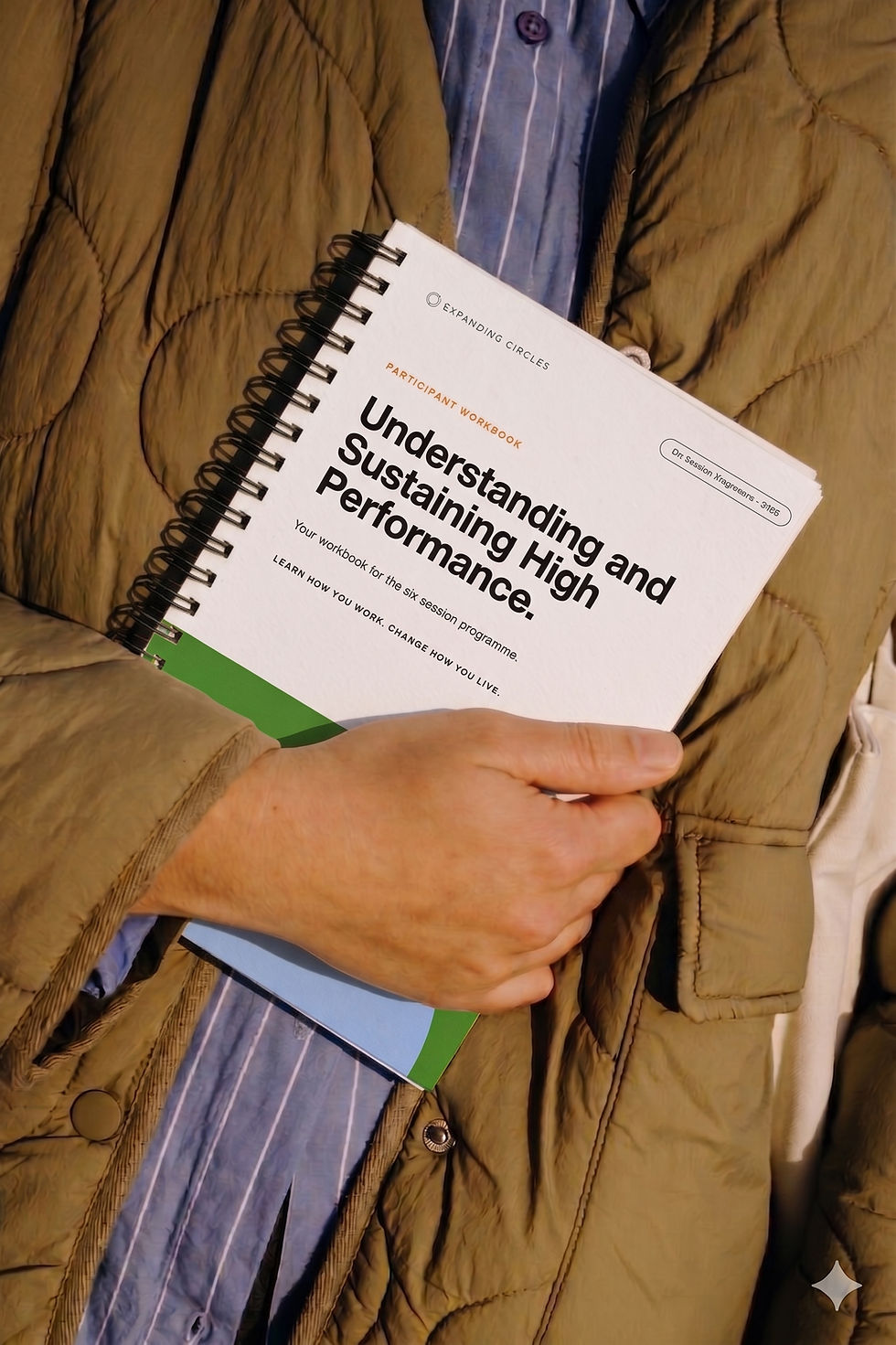
Understanding and Sustaining High Performance
For a team already performing well, built to protect that performance as pressure and change increase.
€24,000 per cohort, up to 15 people, six sessions. Two completed cohorts, unanimous exceeded-expectations ratings across every domain.
Understanding and Leading Through Organisational Change
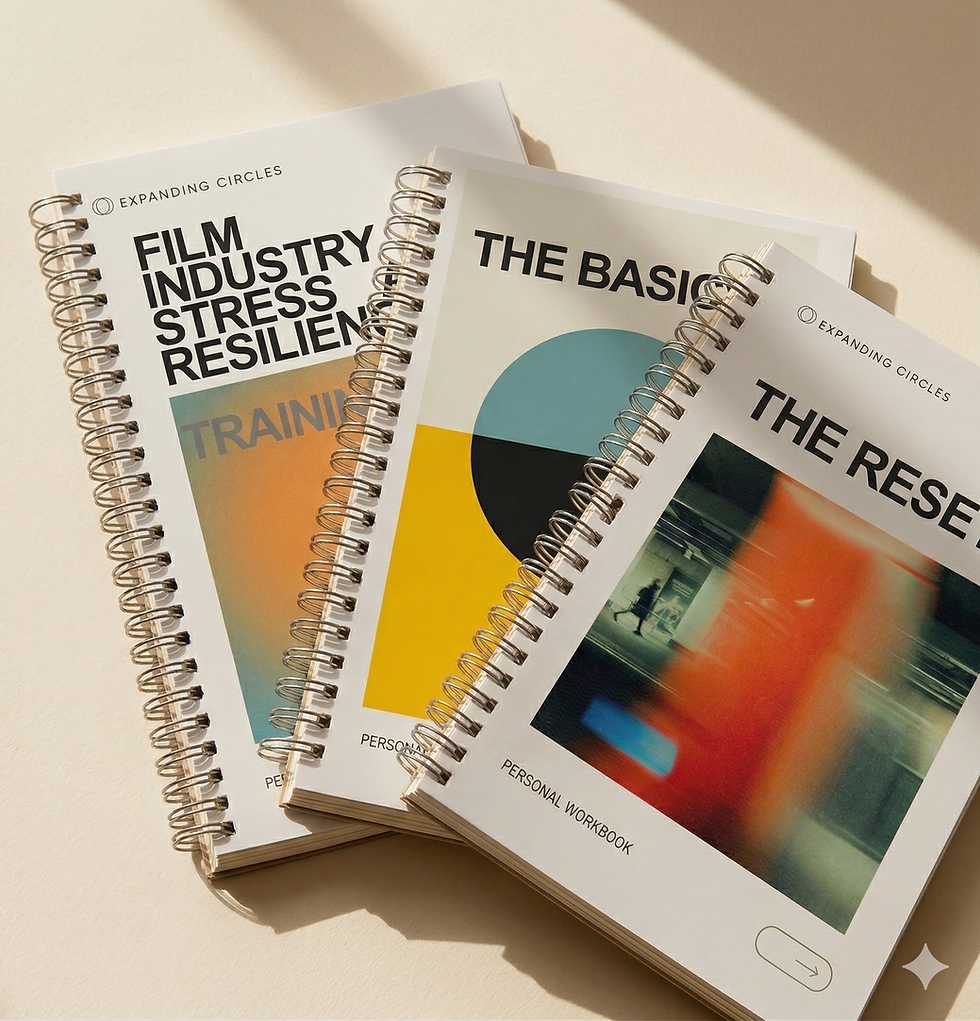
For a team navigating a specific, named change: a restructuring, a merger, a leadership transition. Built around that change, not general resilience.
€28,000 per cohort, nine sessions, delivered by both facilitators together.
A programme built around your specific roadmap
For organisations whose situation doesn't fit a fixed six or nine session structure: a merger integration running over a year, a leadership team spread across regions, a change process with a timeline that's already set. Built entirely from your company's actual roadmap and goals, not adapted from an existing template. Scoped and priced individually, once we understand what you're working with.
THE PROGRAMMES
WHAT TEAMS WALK AWAY WITH
Practical tools people actually use, not slides they forget by Friday. And something harder to build but more durable: a shared vocabulary for talking about pressure, capacity and change, built into the curriculum on purpose, so a team can still name what's happening to them years after the programme ends.
One team we worked with started applying what they learned before the programme had even finished. Eight months later, they were still using the same language and the same tools in day to day conversations, not just in moments of crisis. They now run the programme every year for new hires joining the team, and treat it as a core part of how they build leadership, not a one off intervention.

Why combined approaches hold up
Programmes that combine education, individual work, and structured follow-through, which is our design, show a moderate effect on reducing exhaustion in peer reviewed meta-analysis, larger than organisational only approaches, with effects that hold at twelve months or longer when the follow-through is real.
The scale of it
Gallup puts the global cost of low engagement at roughly ten trillion dollars a year, about nine percent of global GDP. Not a number anyone can act on directly, but a sense of the size of the problem underneath the ones above.
The AI factor
Mercer's Global Talent Trends 2026 found that employee concern about job loss due to AI rose from twenty eight percent in 2024 to forty percent in 2026. Gallup ties the sharpest recent engagement declines specifically to managers navigating AI adoption, restructuring, and return to office pressure at the same time.
What it costs to replace someone
Replacing an employee typically costs fifty to two hundred percent of their annual salary, scaling with seniority, roughly forty percent for frontline roles, eighty percent for mid level, up to two hundred percent for leadership, per SHRM and Gallup.
The quartile gap
Gallup's Q12 meta-analysis found a seventy eight percent swing in absenteeism and a fifty one percent swing in turnover between top quartile and bottom quartile engaged business units. Wherever your teams sit on that spectrum now, that's the range in play.
THE COST OF WAITING
PROOF
Practical tools people keep using. And something harder to build but more durable: a shared vocabulary for pressure, capacity and change, built into the curriculum on purpose, so a team can still name what's happening to them years after the programme ends.
300+
Clients Served
50+
Projects Completed
12
96%
Satisfaction Rate
Years of Experience
QUESTIONS BEFORE YOU BOOK A CALL
Isn't this the same as our existing wellbeing platform or EAP?
The mechanism is different, even where the goal looks similar. Wellbeing platforms ask people to notice something is wrong in themselves and report it, which structurally misses the people most likely to push through instead of raising a hand. We deliver direct, physiological education, in person, with a diagnostic and structured follow-through built in, so it works whether or not someone would ever self-report.
Will this feel too soft for a high performing team?
The opposite is the intent. This is objective, physiological education, not an invitation to sit and talk about feelings. We treat your team the way you'd treat a high performing athlete: teach them exactly how the system works, then train it deliberately.
What happens if we bring you in and nothing changes?
We won't promise you a number before the programme runs, and we won't invent one now. What we can point to: every participant across all completed cohorts and every one to one engagement so far has rated the work as meeting or exceeding expectations, and a growing, peer reviewed evidence base for exactly this design, education plus individual work plus structured follow-through, shows effects that hold at twelve months when the follow-through is real.
What if only some of our team wants to take part?
Individual reports go only to the individual, never the company, which is usually what makes people willing to engage honestly in the first place. Group level reporting only happens with a cohort of ten or more, so no one is ever singled out by opting in or opting out.